
Locate Lorton City Directory Collections
The public record does not establish a continuous published Lorton city directory run or identify exact publishers and years. Fairfax library sources confirm city directories and telephone books as collection categories, but a shelf or catalog check is needed before stating that a particular year exists. That gap is useful information: it keeps a research trail from being built on a guessed volume or a neighboring city’s dates.
| Collection | Years | Where Held | Access |
|---|---|---|---|
| Fairfax city directories | Run and publisher not located | Virginia Room | Ask staff for a catalog and shelf check. |
| Telephone books | Years not published | Virginia Room | In-room consultation; exact run needs confirmation. |
| Reverse directories | No Lorton-specific run located | Virginia Room or archives search | Catalog confirmation required. |
| FCPS yearbooks | More than 300 scans from 36 schools since 2016 | Fairfax Library and Internet Archive | Keyword-searchable digital project; school and year matter. |
| Fairfax Historical Society | 1946-2016, 192 components | ARVAS, Virginia Room, and HRC | Finding aid; no online items in the inspected entry. |
| Harry Lattimore / Lorton Heritage | 1875-1946, 6 components | ARVAS | No online items in the inspected entry. |
| Eastern Fairfax Volume V | 1998 | Fairfax Genealogical Society | Lorton-area burial research route; more than 350 county burial sites reported. |
| County tax books | Land 1851-1980; personal property 1851-1939 | HRC and Library of Virginia microfilm | Some 1851-1920 material is incomplete or fragile. |
| Federal census | Released schedules through 1950 generally available in 2026 | NARA and library databases | Use the release date and census date together. |
These collections are complementary. A directory can place a name or address in a printed year, while a tax book, deed, census, or newspaper can test the same household from a different record system.
Lorton has no separate municipal clerk, municipal court, or city-run historical-record system in the official sources inspected. County offices and state custodians therefore replace the city-office route, while the Virginia Room supplies the deeper local-history access point. Keep that jurisdiction distinction in the research log so a Fairfax County volume is not misdescribed as a Lorton city publication.
Use Lorton City Directory Virginia Room Access
The Virginia Room is the main local-history starting point. It is on the second floor of City of Fairfax Regional Library, 10360 North Street, Fairfax, 703-293-6227 option 6. Its listed hours are Monday through Wednesday, 10 a.m. to 9 p.m., and Thursday through Sunday, 10 a.m. to 6 p.m. The room holds regional history and genealogy, maps, photographs, manuscripts, rare books, local newspapers, and government/legal material.
The Virginia Room collection page shows the research setting for a Lorton city directory shelf check.
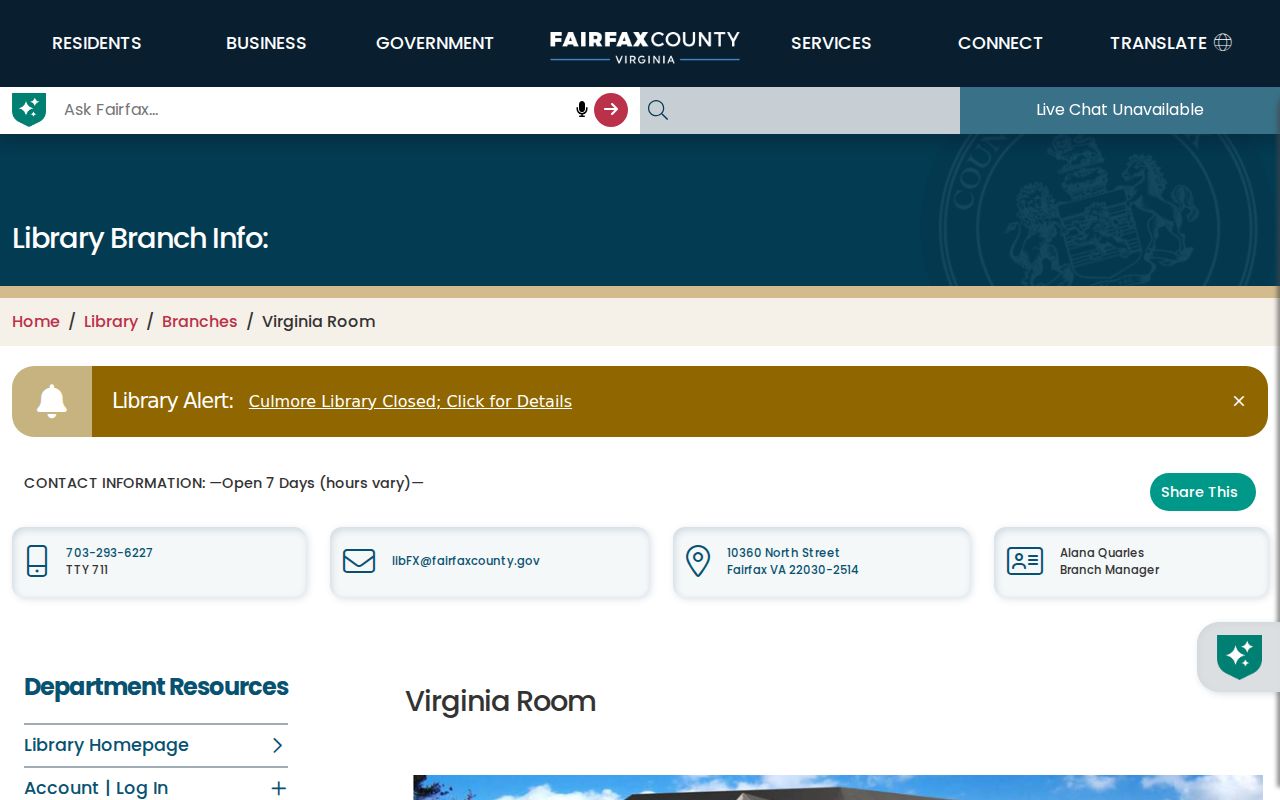
Its CPAN station, eight public computers, and microform reader-printer with USB saving support a combined directory, deed, and newspaper search.
Ask staff to distinguish Fairfax County or Lorton material from City of Fairfax material. The library’s local-history guide points to directories, telephone books, property history, newspapers, yearbooks, oral histories, genealogy databases, and archival sources. It is the appropriate route when the web catalog alone does not settle the actual run.
Confirm Lorton City Directory Volumes
Record the title, publisher, printed year, call number, and whether the book has a name section, address section, telephone listings, or an abbreviation key. A specific digitized Fairfax or Lorton reverse-directory volume was not located in the official material reviewed. The Alexandria house-history guide can illustrate a research method, but its dates are not evidence for Lorton.
A reverse or criss-cross volume is most useful when it has been opened and verified. It may organize entries by street address, while a name section often uses surname order. Neither arrangement proves that an address was occupied for the entire year. Preserve page images or notes that show what the actual volume contains before drawing conclusions.
Note: A missing catalog hit or missing printed year is a collection gap, not proof that a person or household was absent from Lorton.
Read Lorton City Directory Entries
No actual Lorton directory entry was available through the public official pages inspected. For that reason, the following is an inspection checklist, not a claim that any particular Fairfax volume prints every field. Look at the entry and its printed key before transcribing it. The value comes from a careful reading of the specific volume, not from a generic idea of what directories usually include.
| Printed name | Confirm the exact spelling and surname-first order, if used. |
|---|---|
| Household notation | Check whether spouse, relative, or widow notation actually appears. |
| Work or affiliation | Record an occupation or business affiliation only if the entry prints it. |
| Street and number | Copy the address exactly, including abbreviations and page number. |
| Marks and telephone | Check for owner-style marks, telephone number, or an abbreviation key, if present. |
| Address section | Confirm whether a reverse or street-order section exists in that volume. |
- Criss-cross directory
- A directory arranged by address or street, but only after the cataloged volume confirms that arrangement.
- Householder index
- A name index focused on a household contact, when the book identifies one; verify its scope in the volume.
- Abbreviation key
- The printed explanation for shorthand used by that directory. Photograph or note it before interpreting marks.
Trace Lorton City Directory Households
A family-history trail should begin with a verified address and date, not a surname by itself. MAR or iCare can supply the current parcel and address terminology. Then locate the oldest available directory before and after the event, compare the same number, neighboring numbers, street spelling, and any household or business details the printed volume actually contains. Preserve uncertainty when the printing date and event date do not align.
- Write down the address, parcel identifier, legal description, and the source date.
- Inspect verified directory or telephone-book years around the target date, noting exact spelling and page.
- Pair each directory year with the closest released census year, recognizing that they were created on different dates.
- When a directory disappears, test deeds, tax books, newspapers, probate, cemetery publications, yearbooks, and permit records.
- Confirm identity with two independent fields, such as a middle initial and spouse, parcel description, school, business affiliation, or recorded-document role.
A census is a snapshot, not a current-address record. In 2026, released federal schedules generally reach through 1950. A vanished directory entry can reflect a move, a changed listing practice, a missing run, or a change in how the address was described. It does not establish vacancy or absence.
Search Lorton City Directory Yearbook Clues
The Fairfax library yearbook project has scanned more than 300 FCPS yearbooks from 36 schools since 2016. Digitized copies are on Internet Archive and are keyword searchable. The physical collection is nearly 500 yearbooks. A surname, club, school activity, or approximate school-era location can provide a clue to reconcile with a directory or census record.
The digitized yearbook collection shows the companion source available beside Lorton city directory research.
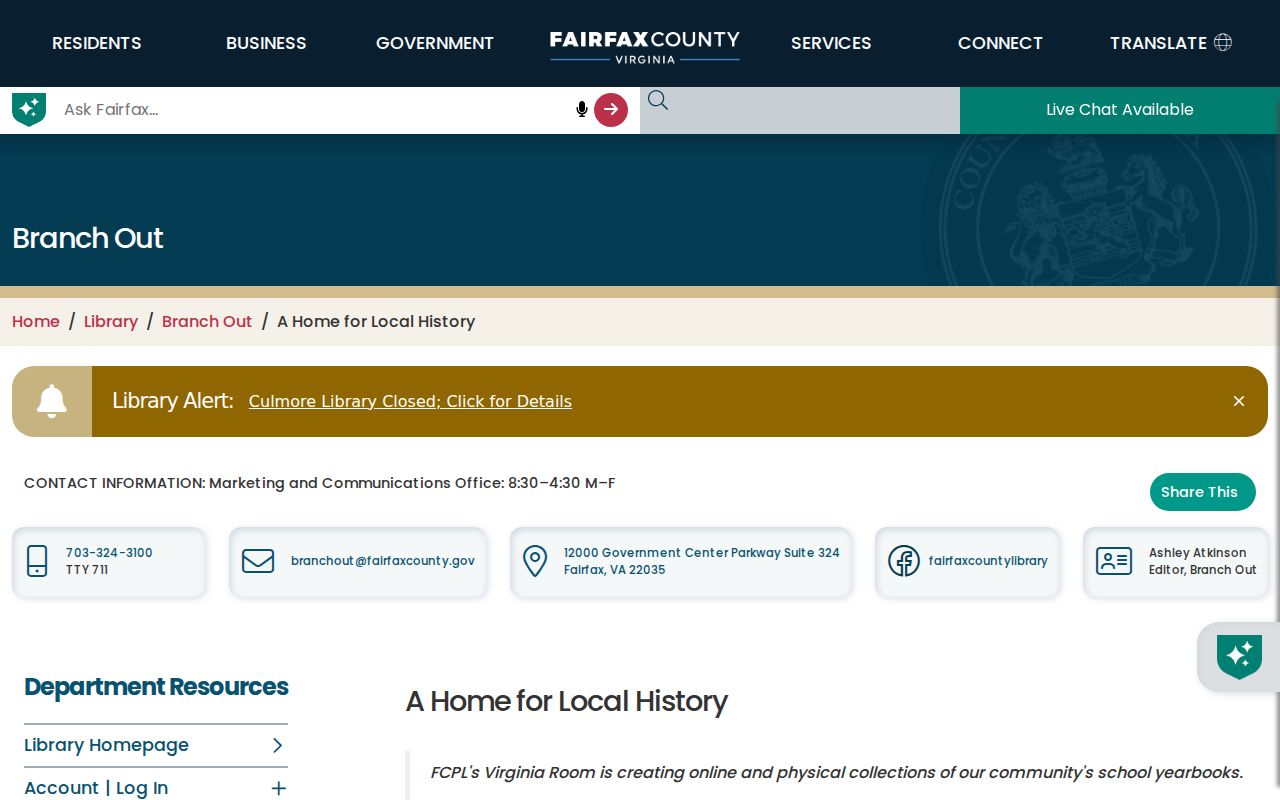
A yearbook appearance establishes a school-era connection, not a present address, so it should be paired with a dated independent record.
Expand Lorton City Directory Archive Searches
The Historical Society of Fairfax County finding aid describes records from 1946 through 2016 in 192 components. The inspected catalog record had no online items. The Harry Lattimore collection, 1875 through 1946 with six components, includes population, school census, and World War II material; Lattimore founded the Lorton Heritage Society. Both routes require an archive or library visit, staff referral, or catalog-led request rather than a promised web entry.
The Historical Society holdings record is a Lorton city directory companion for locating archival context.
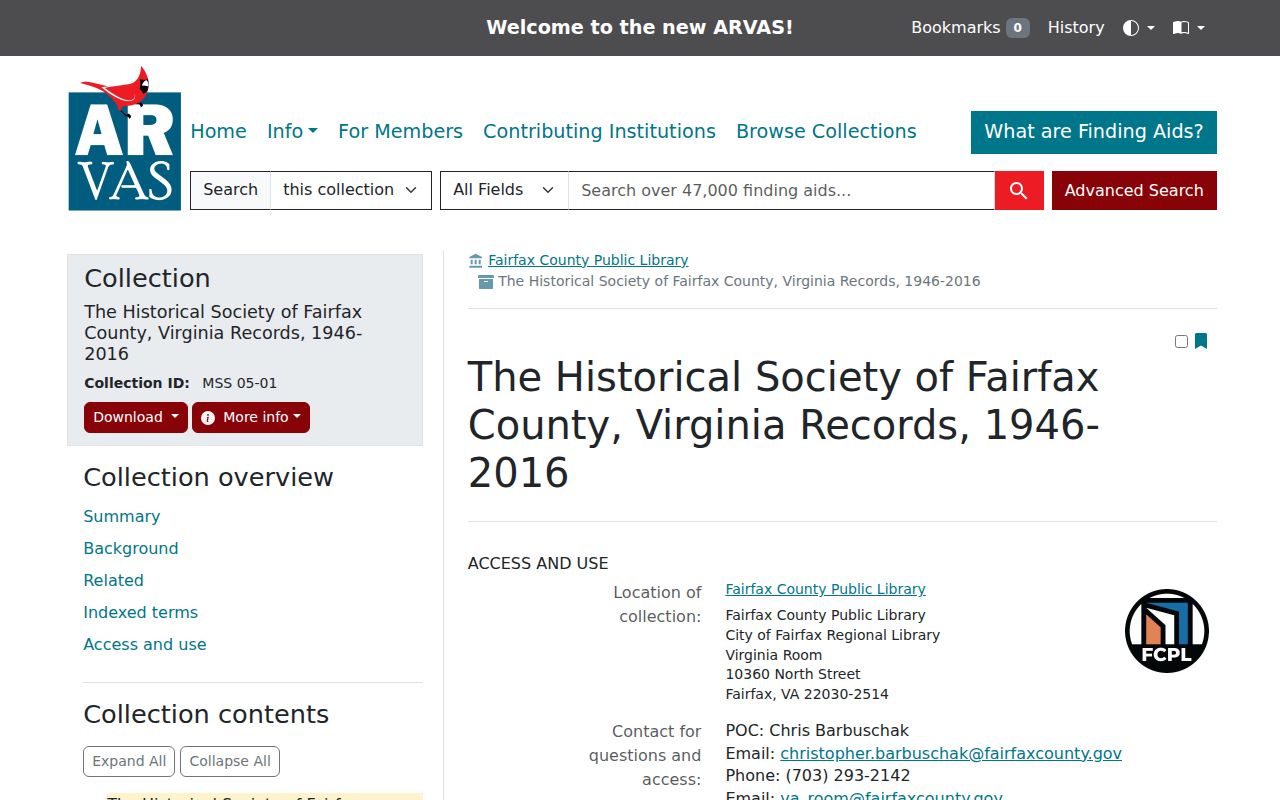
The finding aid provides collection-level dates and scope, while the actual folders and pages require an access arrangement.
The Fairfax Genealogical Society’s Eastern Fairfax Volume V, published in 1998, includes Lorton, Mason Neck, Fort Belvoir, Lincolnia, and South Alexandria. Its burial material can supply a name, date, or relationship clue. Confirm it with an obituary, probate, cemetery custodian, or vital-record channel.
Bridge Lorton City Directory Gaps
County land and tax sources bridge years without a directory. The Historic Records Center holds land tax books from 1851 to 1980 and personal-property tax books from 1851 to 1939, with handling limits for incomplete or fragile 1851-1920 material. Its original deeds, probate holdings, old court books, and Library of Virginia microfilm are alternatives when a name or street vanishes from a library shelf.
The Fairfax local-history guide is the useful routing source for those alternatives.
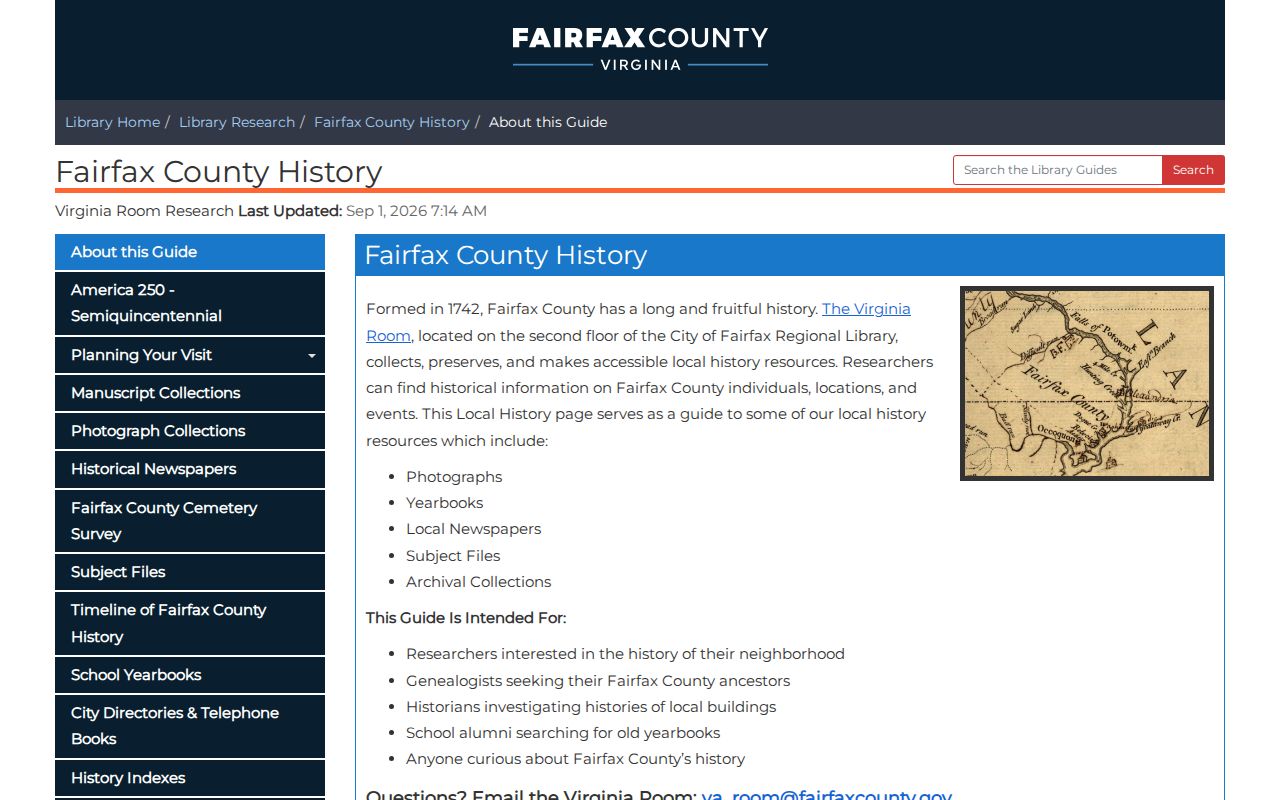
Property-history, newspaper, yearbook, and archival paths offer different evidence than a printed directory and should be logged separately.
Fairfax County land records begin in 1742, although court-order and chancery series contain known historic gaps. For older Lorton material, search a tract, legal description, or landowner as well as a street. Laurel Hill, Lorton Reformatory, D.C. Workhouse, Occoquan Workhouse, Mason Neck, and the historic-district wording can reveal records that omit today’s local label.
Preserve Lorton City Directory Context
Historic source gaps are part of the record, not an invitation to fill them with assumptions. Fairfax’s courthouse moved from Alexandria to Providence, now the City of Fairfax, in 1799, and the first court session there was in 1800. Civil War damage and other losses help explain gaps in court-order and chancery holdings. When a trail reaches such a gap, state the break and turn to surviving deeds, tax books, maps, newspapers, or cemetery publications.
In 2025, the Historic Records Center received a $21,450.60 grant to preserve the 1879 Atlas of Fairfax County and land tax books from 1892, 1900, and 1910. Those materials can connect an old tract or map label to a later deed or parcel search. The connection is historical context, not proof that a named person occupied a particular address.
When a name cannot be found under Lorton, expand the catalog search to Laurel Hill, Mason Neck, Occoquan, Fairfax County, a subdivision, and older tract language. Record the spelling used by each source. A city directory, newspaper, atlas, tax book, and deed may describe the same place differently, especially before a modern address became common.